
Reading time: 15 min
Solar panels: a UK guide for homeowners
The starting point for home solar in the UK: costs, savings, batteries, export payments, rules by nation and the steps to a good installation.
Read more
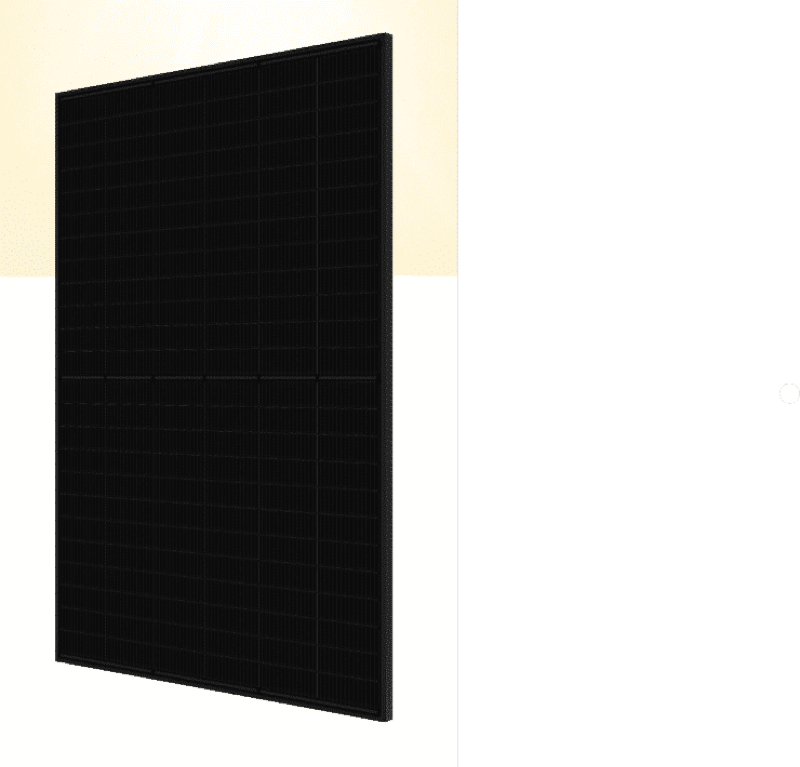
Canadian Solar's TOPHiKu6 is a dual-glass TOPCon panel sized for house roofs. Whether it's a good buy depends on the code on your quote, how many fit, and which warranty edition applies.
 Canada
 13,000+ employees
 Founded 2001
Compare the specifications and warranties of the exact model.
Canadian Solar belongs in a comparison of house-roof quotes: its TOPHiKu6 CS6.2-48TD is a dual-glass TOPCon panel in the common 1,762 × 1,134 mm size, listed in the MCS product directory, with a 25-year product warranty on the black-frame and all-black versions under current terms. The catch is that the warranty depends on when the panels were sold to your installer's supplier: under earlier editions and datasheets the same code could carry 15 years. So "Canadian Solar 470 W" on a quote isn't enough. Ask for the full code, the datasheet and the warranty edition.
If you're new to solar, our guide to solar panels explains the parts of a system before you compare brands.
Canadian Solar's panels are made by its manufacturing arm, CSI Solar, and sold in Europe, including the UK, by Canadian Solar EMEA GmbH. Its European download centre lists:
Your yearly electricity use helps us size your solar panel system.
| On the quote | What it tells you | What to ask for |
|---|---|---|
| TOPHiKu6 | N-type TOPCon panel family | The generation and full code |
| CS6.2-48TD | The house-size format | Dimensions and how many fit |
| Black frame or all black | Two looks | A photo of the exact version |
| -470 | The rated power in watts | The number of panels and total kWp |
| TOPBiHiKu… | A bifacial, larger panel | Why it suits your roof, and the rear-side assumptions |
TOPCon is a cell design that cuts some electrical losses. On your roof it shows up as the panel's power and efficiency, and then in the total that fits. It doesn't tell you whether the mounting, inverter or shading study are any good.
The MCS product directory lists the CS6.2-48TD from 435 W to 485 W under Canadian Solar Inc, on a certificate running from 24 February 2026 with no grace-period label (checked 24 September 2026). An MCS installer has to use listed panels, so search the directory for the code on your quote.
On a simple, clear roof face, bigger panels can reach your target with fewer pieces. On a roof broken up by roof windows, a chimney or a valley, a smaller panel may lay out better. Ask for a scale drawing with every quote: a few watts per panel only mean something once you've counted how many fit. Our guide to how many solar panels you need starts from your roof and your electricity use.
Example (illustrative): twelve 475 W panels make 5.70 kWp; thirteen 450 W panels make 5.85 kWp. The second layout beats the first despite the lower-rated panel. It doesn't predict yearly output, because the extra panel may sit in poorer light.
kWp is the system's rated power under test conditions. kWh is the energy it actually produces over time. A 5.85 kWp system doesn't produce 5.85 kWh every hour.
Ask for the European datasheet for the full code and its version number. A North American TOPHiKu6 datasheet doesn't show the terms that apply to panels sold for the UK.
Canadian Solar's TOPHiKu warranty statement applies by the date of the sales contract between CSI Solar and its customer, usually a wholesaler. The two recent editions treat the CS6.2-48TD differently:
| Edition | Applies to contracts signed | Product warranty for CS6.2-48TD |
|---|---|---|
| Version 1.6 (March 2025) | from 21 March 2025 | Listed under both 15 years and, for black-frame and all-black versions outside Japan, 25 years |
| Version 1.9 (May 2026) | from 30 May 2026 | 25 years for black-frame and all-black versions outside Japan; the 15-year list no longer includes it outside Japan |
Older datasheets, such as the June 2024 all-black sheet, show 15 years. The power warranty is the same in both editions: at least 99% of rated power in year one, no more than 0.4% loss a year after, and at least 87.4% at year 30. It measures the panel under test conditions, not the kilowatt-hours your home gets or a monthly saving. The inverter, mounting and the installer's work have separate warranties; our guide to how long solar panels last explains how to read a power warranty.
The terms that affect a homeowner:
Ask the installer which edition covers your panels and to attach it to the contract.
Higher efficiency helps most when roof space is short. With plenty of space, more lower-rated panels can reach the same kWp; compare the full cost of both layouts, including fixings and labour. Datasheet watts and percentages come from standard test conditions, and a warm, partly shaded roof isn't a laboratory.
A south-facing roof isn't the only good option. East and west faces spread production across the morning and evening, closer to when many households use electricity. Ask how the panels are split between the inverter's inputs and what each roof face is expected to produce. How much solar you use at home depends on when you use electricity, not only on the yearly total.
Regular shade needs a proper assessment. A claim about how a panel copes with shade doesn't replace moving it out of the shadow of a chimney or tree. If an estimate shows strong output behind an obstacle, ask how the loss was worked out; our shading guide explains what to look for.
There's no single price for an installed TOPHiKu6 system: access, the number of panels, the inverter, the electrical work and any battery all move it. For a benchmark, DESNZ's cost data give domestic retrofit means of £2,109 per kW for systems up to 4 kW and £1,651 per kW for 4–10 kW in Great Britain (2025/26, per kW of total installed capacity, including VAT, excluding batteries): smaller systems cost more per kW. Our solar panel cost guide explains the difference. Compare Canadian Solar against another brand with the same kWp and the same scope of work. A quote that leaves out scaffolding or monitoring isn't really cheaper.
When the installer supplies and fits the panels in your home, VAT is 0% until 31 March 2027, then 5% unless the relief is extended; bought on their own they carry 20%. To be paid for surplus power in Great Britain, pick a supplier's Smart Export Guarantee tariff; suppliers set their own rates and terms, and they will want the system MCS certified, or certified to an equivalent scheme. Ask what happens if the quoted panel is out of stock: a substitute should come with a new datasheet, warranty document and layout before fitting.
At handover, keep:
Money you pay up front is at risk if an installer stops trading before the job is done. If your installer belongs to RECC, the code limits the deposit to 25% of the price and deposit plus other advance payments to 60%, requires those payments to be insured, and its workmanship warranty must be insurance-backed and pass to the next owner of the house. Membership isn't automatic with MCS any more, so check the RECC register before you pay. Whatever the installer's memberships, the Consumer Rights Act 2015 lets you hold them to satisfactory goods and careful work. Our guides to comparing solar quotes and choosing a solar installer cover the rest.
The TOPHiKu6 gives you a dual-glass panel in a common house-roof size. Its most useful strength is being able to pick the exact code that suits your space, your roof's looks and the warranty that actually applies. It's a solid choice when the supplier provides the European documents and the installer explains who handles a claim. A quote that names only the brand and a wattage isn't detailed enough to judge. Our best solar panels guide compares it with other brands on the same basis. Canadian Solar also sells an EP Cube home battery through UK retailers; this page covers its panels.
No. Under the May 2026 edition the black-frame and all-black CS6.2-48TD get 25 years outside Japan, but older editions and datasheets show 15 years. Ask which edition covers your panels.
Not necessarily. It can stop you fitting an extra row. Compare the number of panels that actually fit and the total kWp.
Your installer should raise it. Canadian Solar's warranty sends European claims to Canadian Solar EMEA GmbH in Munich, with serial numbers and invoices.
No. It covers the panel's measured power. Your bill depends on how much the system produces, when you use electricity and the price you pay.
Tell us about your home and we’ll look for an MCS-certified installer who can quote.
 No cost and no obligation
MCS-certified installers
One short request
We currently receive no payment from installers, or from anyone else, for quote requests.
 Get quotes: Canadian Solar
We currently receive no payment from installers, or from anyone else, for quote requests.