
Reading time: 10 min
How many solar panels do I need?
Panel counts for typical UK homes by location, the sizing formula with worked examples, and why more panels mostly means more exports.
Read more
DMEGC's Infinity RT panels come in two generations and several builds. The code on your quote decides the wattage, whether the back produces power, and the warranty.
 China
China
 16,000+ employees
 Founded 2009
Compare the specifications and warranties of the exact model.
DMEGC is a sensible panel to shortlist if you want an all-black, dual-glass panel and the installed price is competitive, as long as your quote names the exact Infinity RT code. The range spans two generations and several builds: some are monofacial (only the front produces power), others bifacial. DMEGC's current warranty gives its house-size dual-glass models 25 years on the product and 30 years on power. Its website lists a UK regional office, and its panels are in the MCS product directory, which is what an MCS installer needs.
Judge a DMEGC quote on the whole system: how many panels fit your roof, the inverter, the installed price and who handles a warranty claim. A few watts more per panel matter less than any of those.
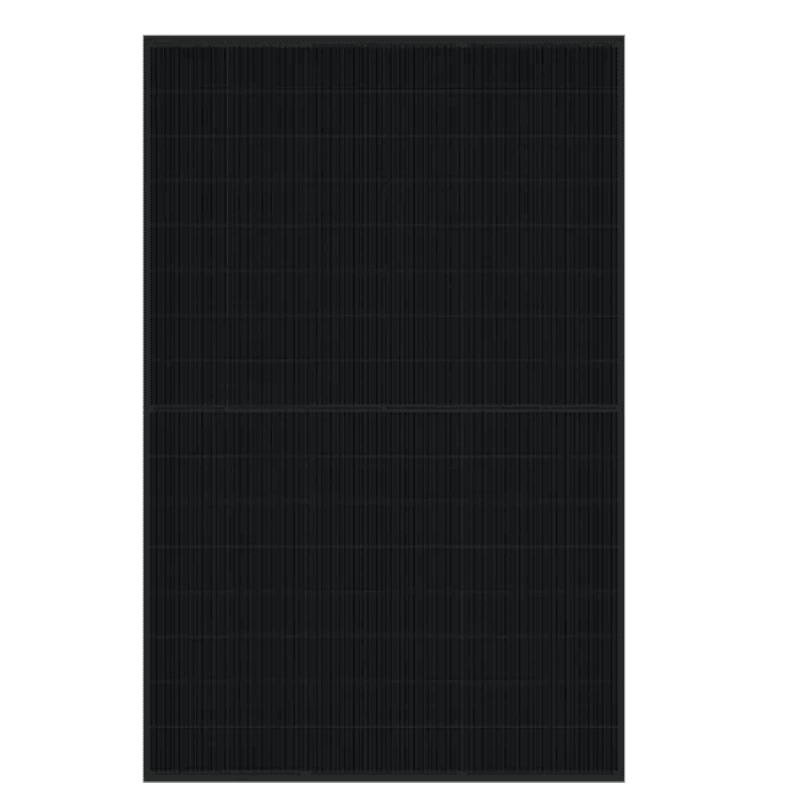
DMEGC sells its house panels under the Infinity RT name. The 2.0 and 3.0 generations share the same 1,762 × 1,134 mm footprint and the same short codes, so "G48HBB" on its own doesn't tell you which one you're getting. In the English datasheets we checked:
Your yearly electricity use helps us size your solar panel system.
| Code (generation) | Build | Power range | Top efficiency | Datasheet |
|---|---|---|---|---|
| G12RT-G48HBB (2.0) | Dual glass, monofacial, all black | 455–475 W | 23.8% | July 2026 |
| G12RT-G48HBB (3.0) | Dual glass, monofacial, all black | 460–485 W | 24.3% | August 2026 |
| G12RT-B48HBB (2.0) | Dual glass, bifacial | 450–470 W | 23.5% | July 2026 |
DMEGC also makes 54-cell versions of 500–535 W and larger panels of 600 W and more for commercial roofs. Bigger panels mean fewer fit on a small roof, so they aren't an upgrade by default.
If an installer swaps the panel before fitting, ask for a new roof layout and a check that the inverter still suits the new panel's voltage and current. The solar panel sizes guide explains why a few millimetres can cost a row.
Dual glass means glass on the front and the back of the cells instead of a plastic backsheet. Bifacial means the back of the cells also converts light. A dual-glass panel can be either: DMEGC's G48HBB is dual glass but monofacial, while the B48HBB is bifacial.
On a pitched roof the panels sit close to the tiles or slates, so little light reaches the back and any bifacial gain is small. It can be worth more on a flat-roof frame, a carport or a ground mount over pale gravel. Ask your installer to model the front side only unless they can explain the rear-side gain for your setting.
The MCS product directory lists bifacial DMEGC panels at a "BNPI" rating, which adds an assumed amount of light on the back. DMEGC's datasheet rates the 470 W B48HBB at 519 W on that basis, and one MCS record names that panel "DM519G12RT-B48HBB". Another lists the DM470G12RT-B48HBB at 536 W. Whichever figure you see, the number printed on the panel label and used for your kWp is the 470 W front rating.
DMEGC markets the G48HBB as a full-black panel, made with what it calls its Advanced Black Technology. An all-black panel makes a visible roof look tidier, but it's a finish, not extra output. The frame, clamps and gaps between panels still show, so ask for a layout drawing and a photo of the exact panel. If you live in a conservation area or a listed building, check the planning position before you settle on a layout; our planning guide covers each UK nation.
The efficiency figure on a datasheet is measured under standard test conditions. Your yearly output depends on your roof's direction, pitch, shading and location.
Example (illustrative, not a production forecast): ten 475 W panels make 4.75 kWp; ten 485 W panels make 4.85 kWp, 100 W or about 2% more. If a different layout means only nine panels fit, the total drops to 4.365 kWp. That is why a roof plan beats comparing maximum wattages.
Ask for the number of panels on each roof face, the shading allowed for, and confirmation that the string design matches the inverter. If you expect an electric car or heat pump later, say so now: it may change the system size, not the panel choice. Our guide to how many solar panels you need starts from your roof and your electricity use.
DMEGC's limited warranty for N-type panels (DMW-STD02N-2026002) covers panels supplied under agreements signed from 1 June 2026. For the dual-glass house panels above it gives:
| Cover | Terms |
|---|---|
| Product (defects) | 25 years for dual-glass G12RT 48- and 54-cell panels; 20 years for the glass-backsheet versions |
| Power | 30 years: no more than 1% loss in year one and 0.4% a year after, at least 87.4% at year 30 |
| Some serial numbers | Panels with "3" as the 7th digit of the serial number: 0.35% a year and 88.85% at year 30, matching the 3.0 datasheet |
| Start date | Installation, or six months after the panel left the factory if earlier |
In practice: a 470 W panel should still measure at least 410.8 W under test conditions after 30 years (470 × 0.874). A power warranty covers the panel's rated output. A shadow, a dirty roof or a failed inverter can still cut the energy you get, and it doesn't cover those. Our guide to how long solar panels last explains the difference.
The small print matters more than the headline:
Keep a photo of each panel label before fitting and a copy of the invoice that lists the codes. Those are the first things a claim needs.
DMEGC's website lists a UK regional office. The contacts it publishes for Europe are its Dutch branch, DMEGC Renewable Energy B.V., and a service line in China, so your installer is the practical first contact. The MCS product directory lists DMEGC panels under Hengdian Group DMEGC Magnetics Co., Ltd., including the G48HBB and B48HBB codes, whose certificates carry no grace-period label (checked 24 September 2026). MCS rules require an installer to use panels listed there, so search it for the full code on your quote.
For a price benchmark, DESNZ's cost data give a mean installed cost of £1,651 per kW for domestic retrofit systems of 4–10 kW in Great Britain (2025/26, total installed capacity basis, including VAT, excluding batteries). Our solar panel cost guide explains what drives a quote above or below that. A DMEGC system fitted in your home by the firm that supplies it pays no VAT until 31 March 2027; from 1 April 2027 the rate is 5% unless the relief is extended, and buying the panels alone means 20%. In Great Britain, electricity suppliers pay for exported power through their own Smart Export Guarantee tariffs, each with its own rate and conditions, and they need the installation to have MCS certification or an equivalent.
A complaint about a DMEGC panel will start with the firm that sold it, not with a factory in Zhejiang. The Consumer Rights Act 2015 gives you rights against that firm: goods of satisfactory quality and a job done with reasonable care and skill. If you reach deadlock, a consumer code can give you an independent way to settle it: HIES, for example, offers alternative dispute resolution, and RECC is the other code that MCS installers used to have to join. MCS's redeveloped installer scheme no longer requires membership, so ask the installer which code they belong to and look them up before you sign.
Our guide to comparing solar quotes lists every line to line up between offers.
Consider DMEGC when an installer offers a named Infinity RT code at a keen installed price and can show the warranty document and a UK supply route. The dual-glass, all-black models suit visible pitched roofs. We don't give DMEGC a score or an average price: the result depends on the model and the installation. Compare it with Trina Solar or another panel of the same size and total kWp before you decide; our best solar panels guide lines brands up on the same basis.
No. DMEGC's datasheet describes it as monofacial. Glass on the back protects the cells; it doesn't mean the back produces power.
No. The 3.0 G48HBB goes up to 485 W, against 475 W for the 2.0 version, and has a slightly better power warranty. Ask for the datasheet for the generation and power class you'll get.
Your installer. DMEGC's warranty is written for its direct customer and claims go in writing within 30 days of finding the fault. Keep the invoice and panel serial numbers.
Yes, many codes are, including the Infinity RT G48HBB and B48HBB, under Hengdian Group DMEGC Magnetics Co., Ltd. Check the exact code on your quote in the MCS product directory.
Tell us about your home and we’ll look for an MCS-certified installer who can quote.
 No cost and no obligation
MCS-certified installers
One short request
We currently receive no payment from installers, or from anyone else, for quote requests.
 Get quotes: DMEGC
We currently receive no payment from installers, or from anyone else, for quote requests.