
Reading time: 8 min
Solar panel sizes and weights
The size and weight of four current home solar panels, read from their datasheets, and how to turn those numbers into panels, kWp and a layout that fits your roof.
Read more
REC's Alpha Pure panels use heterojunction (HJT) cells and come in two widths. Whether REC is worth the price depends on how many fit your roof and whether your installer can give you REC ProTrust.
 Norway
 2,000+ employees
 Founded 1996
Compare the specifications and warranties of the exact model.
REC is worth comparing if you want high-efficiency residential panels with a well-documented warranty. The choice isn't just the logo or "25 years". REC's current home range is the Alpha Pure series: the Pure-R, which is narrower, and the Pure-RX, which is wider and more powerful per panel. They fit a roof differently. REC ProTrust can extend the standard warranty and add cover for labour, but only if a REC-certified installer fits and registers the panels. To judge whether REC is worth the price on a quote, compare the roof layouts and the cover you will actually get.
Panels are one part of the system: the mounting, inverter, wiring and the quality of the installation all decide how much electricity you get.
REC's page for England lists the Alpha Pure-R and Alpha Pure-RX. Other REC families and older generations appear in REC's documents and on existing roofs, but the full model name, power class and datasheet edition should be on your quote.
Your yearly electricity use helps us size your solar panel system.
| Panel | Size in the datasheet we checked | Power classes in that datasheet | What it means for your roof |
|---|---|---|---|
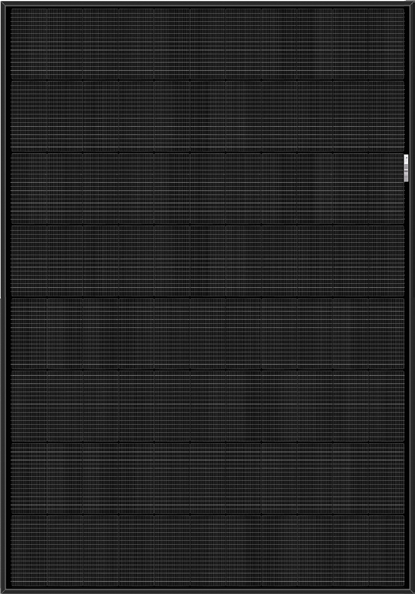
| Alpha Pure-R | 1,730 × 1,118 mm, 21.5 kg | 400–430 W | Narrower; can fit more panels on a small or broken-up roof |
| Alpha Pure-RX | 1,728 × 1,205 mm, 22.7 kg | 450–475 W | More watts per panel, but 87 mm wider to fit between obstacles |
The figures come from REC's English Pure-R datasheet and REC's IEC edition (AU CEC) of the Pure-RX datasheet. REC's page for England shows a lower Pure-RX range (450–470 W), and MCS's product directory lists Pure-RX classes from 420 to 475 W. So check the exact code on your quote, for example REC460AA Pure-RX, against the datasheet edition you are given.
Example (illustrative): suppose a dormer leaves 2.30 m of usable width once the installer's edge clearances are allowed for. Two Pure-R panels side by side measure 2 × 1.118 = 2.236 m before any gap between them, which may or may not fit once the real gaps are added. Two Pure-RX panels measure 2 × 1.205 = 2.410 m and won't fit. On a large, plain roof the Pure-RX can reach the same system size with fewer panels. A scaled roof plan, not this example, decides for your home. Our guide to solar panel sizes compares REC's width with other common panels.
Both Alpha Pure panels use HJT (heterojunction) cells, which combine different layers of silicon to cut some electrical losses. Both datasheets give a power temperature coefficient of −0.24% per °C: the panel's output falls by that much for each degree the cells run above 25 °C. A smaller figure means less loss on a hot roof. It helps on warm summer days, but the number alone doesn't predict your annual kWh. Our guide to solar panels in hot weather explains how much it matters in the UK.
The useful test is to ask each installer for a generation estimate for the same roof, orientation, shading and inverter. A higher-watt Pure-RX doesn't produce more if its width costs you a column of panels or the inverter is poorly matched.
The datasheets describe the cells as bifacial but the panels have a black polymer backsheet, so don't count on extra output from light reaching the back. Each panel has four bypass diodes, which limit the loss when part of it is shaded, but they don't remove the effect of a tree or chimney.
If an installer offers both, ask for a Pure-R layout and a Pure-RX layout, each with the number of panels, total kWp and estimated kWh. A more powerful panel can be the worse choice if it leaves space unused.
REC's strengths are easy to see: documented HJT cells, two residential widths and a European warranty certificate that names the UK. Its practical limits are just as concrete. The Pure-RX is wide; the Pure-R may need more panels for the same system size; and ProTrust is no benefit if your installation doesn't qualify. Compare the installed price, because a price per panel doesn't include mounting, electrical work, paperwork or aftercare.
Check the electrical values as well as the dimensions. The voltage, current and power of the panel you are sold must suit the inverter or microinverters, string lengths and protection your installer uses. Don't assume a REC panel can replace another brand on a quote by changing only the panel name.
Both datasheets say the panels are made in Singapore. If where a panel is made matters to you, ask for the documents of the panels actually delivered.
Selling surplus power in Great Britain means signing up to an electricity supplier's Smart Export Guarantee tariff: each supplier sets its own rate and terms, and all of them need the installation and installer to be MCS certified (or equivalent). MCS installers fit panels listed in MCS's product directory. When we checked on 24 September 2026, the directory listed REC Alpha Pure-R panels from 380 to 430 W (certified since March 2023) and Pure-RX panels from 420 to 475 W (the 425–475 W codes certified from 31 July 2026), all current. Look up your exact code before you sign; the directory also shows older REC families.
The SEG doesn't apply in Northern Ireland, where export payments come from suppliers' own tariffs.
REC's European warranty certificate for Alpha panels (Rev 8, February 2026) covers panels bought in the UK as well as the EU. The datasheets set out two levels of cover:
| Standard | REC ProTrust (systems under 25 kW) | |
|---|---|---|
| Product warranty | 20 years | 25 years |
| Power warranty | 25 years | 25 years |
| Labour | Not covered | 25 years |
| Who gives it | REC, whoever sold the panels | REC, only if a REC Certified Solar Professional registers the panels |
The power warranty says the panel will give at least 98% of its rated power in the first year, then lose no more than 0.25% a year, reaching at least 92% after 25 years. That is a promise about the panel's tested power, not about your annual kWh: shading, dirt, the inverter and your own use all vary independently.
Under the standard warranty, REC repairs or replaces the panel, or refunds its current market price, and pays to ship replacements to its chosen facility. It doesn't pay for the labour to take a panel off the roof and fit the new one, so scaffolding and an installer's time would be yours. The 20-year product warranty runs from the date you bought the panels (and no more than 20.5 years from their production date). It passes to a new owner of your home only if the panels stay where they were installed and the system isn't altered.
ProTrust is REC's add-on for installations by a REC Certified Solar Professional. For an approved claim, REC pays a fixed labour fee to a certified installer, so ask what it covers for your roof: a fixed fee may not cover scaffolding or difficult access. REC says ProTrust still applies if the original installer goes out of business. Before you sign, ask the installer for proof of their REC certification, who registers the panels and what confirmation you'll receive.
To claim, contact the distributor or seller you bought from, or register the claim at recgroup.com/claims, with proof of purchase and the serial numbers. Keep your invoice, panel codes, serial numbers, the roof plan and the ProTrust registration.
REC's England page names Segen as its authorised UK distributor, and REC's installer locator lists certified installers by area. Your installer is the first call for any fault, and REC's regional office handles claims.
REC may be worth paying more for if the comparison shows a better roof layout, more useful energy, or ProTrust cover you actually receive and value on a hard-to-reach roof. It suits a buyer who will keep the documents and stay in the home for a long time. A weaker offer is a Pure-RX chosen only for its watts, without a plan showing it fits, or a ProTrust promise from an installer who isn't certified.
For comparison, AIKO and LONGi are worth quoting alongside REC if power per square metre is your priority. They aren't automatic equivalents, so compare offers on the same roof, inverter and estimated output. Our best solar panels guide compares more brands. To compare two REC offers, ask for:
When your installer supplies and fits REC panels in your home, they carry 0% VAT to 31 March 2027, moving to 5% on 1 April 2027 if the relief isn't extended; bought on their own, panels pay 20%.
A 25-year panel warranty can outlast the company that fitted the panels. Under the Consumer Rights Act 2015, poor workmanship or a faulty panel is the installer's responsibility, whatever REC's warranty says. If the installer belongs to RECC, its workmanship guarantee must be insurance-backed, which protects you if the company closes; being MCS-certified no longer means belonging to a consumer code, so check the RECC or HIES register yourself. Our guides to comparing solar quotes and choosing an installer cover these checks, and choosing an installer matters twice with REC, because ProTrust depends on their certification and registration.
No. The Pure-RX gives more power per panel, but its extra width can reduce how many panels fit. The roof plan and the estimated kWh decide better than wattage alone.
No. It needs a REC Certified Solar Professional, registration by that installer and a system under 25 kW for the 25-year labour cover. Without proof, compare the quote on the standard warranty.
No. It covers the panel's tested power after 25 years. Your annual output depends on the whole installation and conditions on your roof.
The Alpha Pure-R and Pure-RX codes we looked up were listed in MCS's product directory on 24 September 2026. Check the exact code on your quote.
Tell us about your home and we’ll look for an MCS-certified installer who can quote.
 No cost and no obligation
MCS-certified installers
One short request
We currently receive no payment from installers, or from anyone else, for quote requests.
 Get quotes: REC Group
We currently receive no payment from installers, or from anyone else, for quote requests.